Hey again everyone! Hope you all are doing well!
I got some very cool new roaches last week from Spencer Thornton AKA Sleepy Lemur on the forums. I ordered seven Blaberus craniifer "Orin McMonigle"nymphs, eight Blaberus craniifer "UCR"nymphs, ten small Elliptorhina laevigata nymphs. However, I received sixteen B.craniifer "Orin McMonigle"nymphs, twelve B.craniifer "UCR"nymphs, fourteen small E.laevigata nymphs, AND nine free Diploptera punctata(three adults, five large nymphs, and one medium-sized nymph!) :D I was obviously beyond pleased with what I received, in fact, it has to be the most generously packed box that I have received from anyone on or off the forums! Also forgot to mention that despite the package getting shipped Monday and unfortunately having to get held over Thanksgiving, I only received one DOA(that being a very small E.laevigata nymph who was preparing for a molt, and apparently got handled a bit too roughly by the post office), which is a testament to Spencer's packing job.
But that's enough with the review, I'm pretty sure you guys want to see some pics and such of the roaches right?
First, the B.craniifer "Orin McMonigle" are mostly medium/large nymphs, but there are also a couple very small 2nd-3rd instar nymphs. With the B.craniifer "UCR", I received exclusively medium/large nymphs. I'm keeping both strains in sixteen quart plastic containers( which I will be adding ventilation holes to very soon)with about two inches of moist coconut fiber as the substrate. I will also be adding a piece of bark or egg crate to their enclosures for them to molt to adults from.
Here are some pictures of the two strains and their enclosures!
 |
| Medium/Large B.craniifer "Orin McMonigle" nymphs |
 |
| Medium/Large B.craniifer "Orin McMonigle" nymph burrowing into substrate |
 |
| Handling medium/large B.craniifer "Orin McMonigle" nymph |
 |
| Handling very small B.craniifer "Orin McMonigle" nymph |
 |
| Sixteen B.craniifer "Orin McMonigle" nymphs |
 |
| B.craniifer "UCR" nymphs |
 |
| Handling B.craniifer "UCR" nymphs |
 |
| B.craniifer "UCR" nymphs coming out of substrate |
 |
| Twelve B.craniifer "UCR" nymphs |
 |
| B.craniifer enclosure(note that I only took pics of one since they're exactly the same) |
Even though this is a common species in the hobby and very easy to care for, I still am very happy to have acquired this striking(as adults) species!
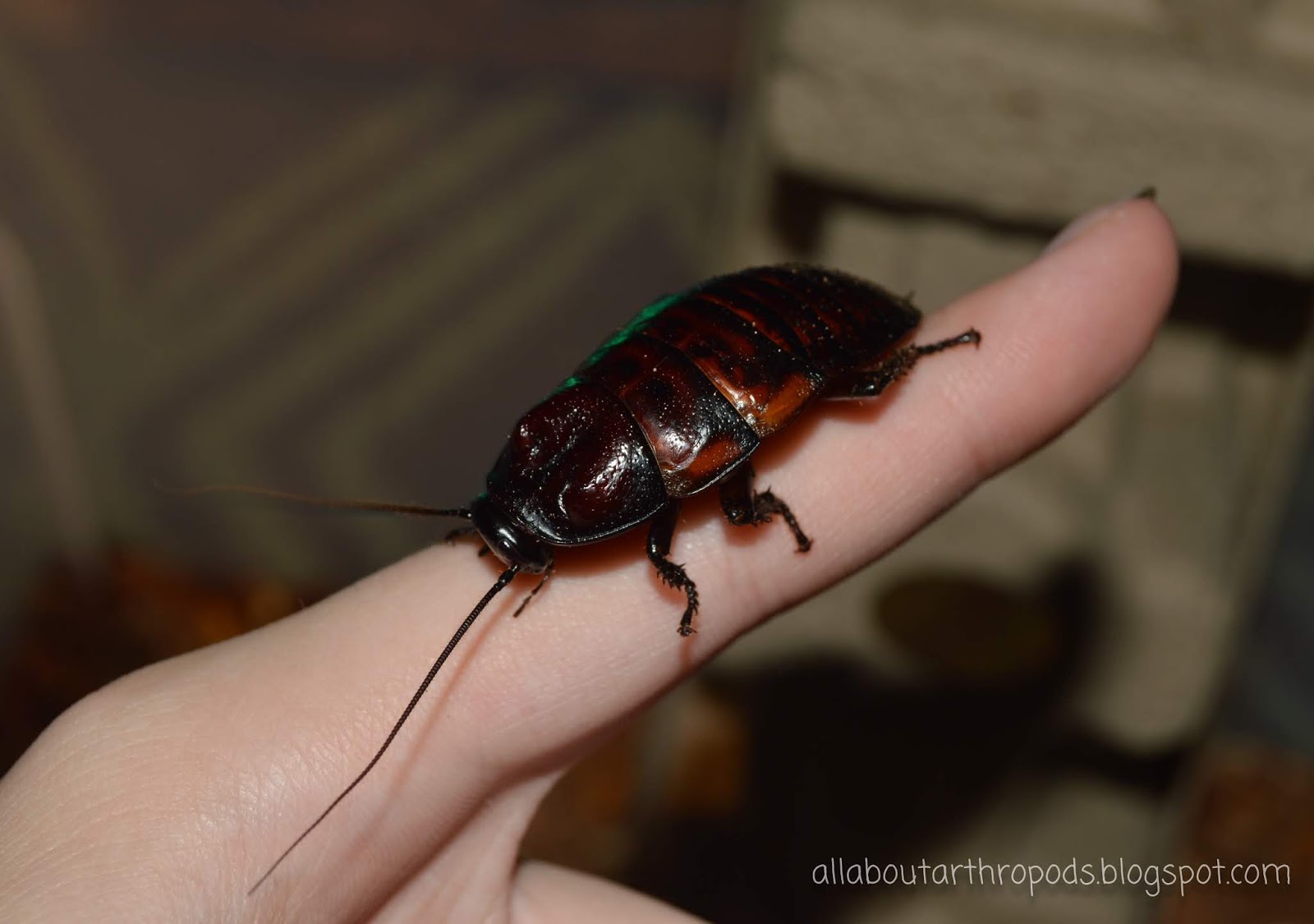
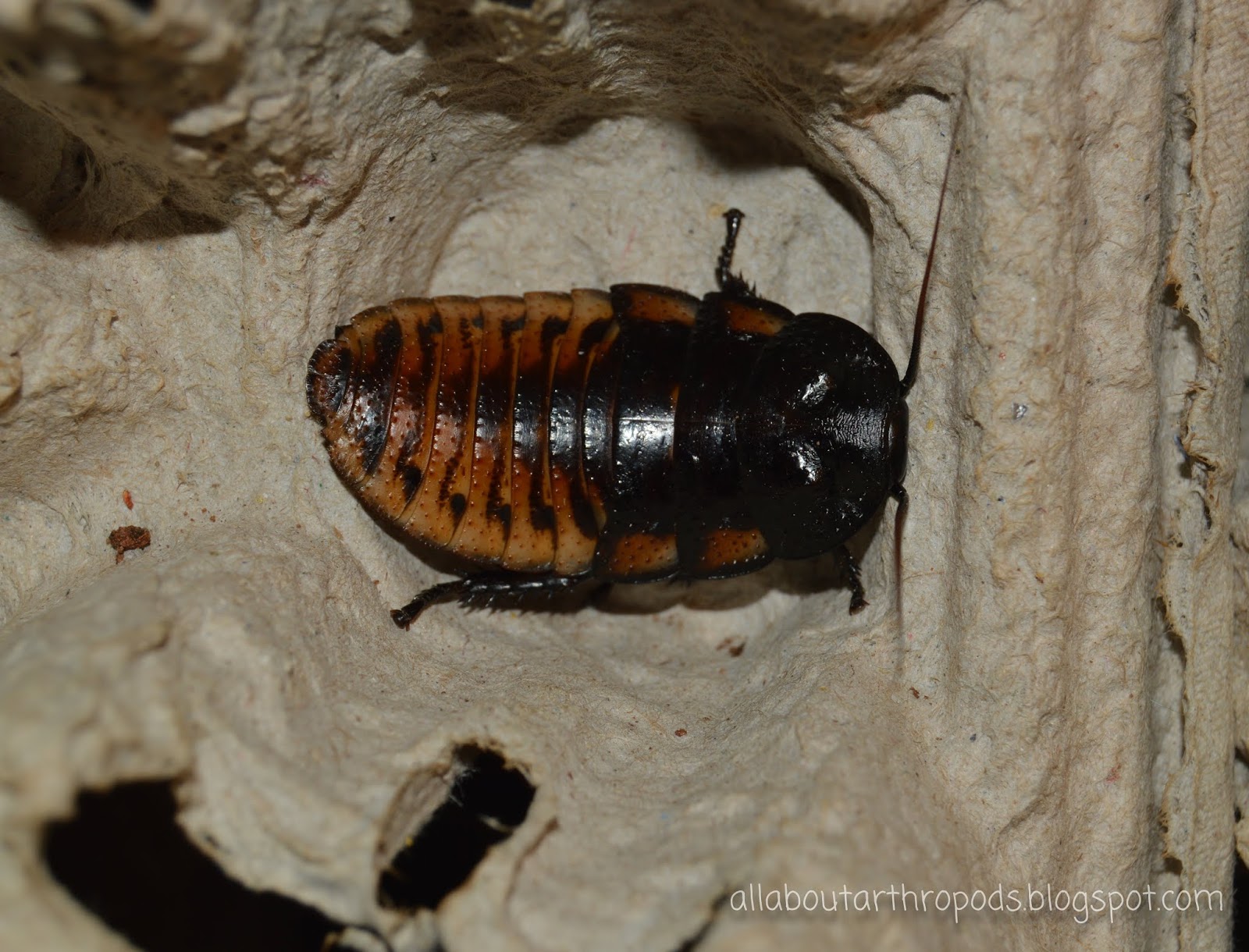
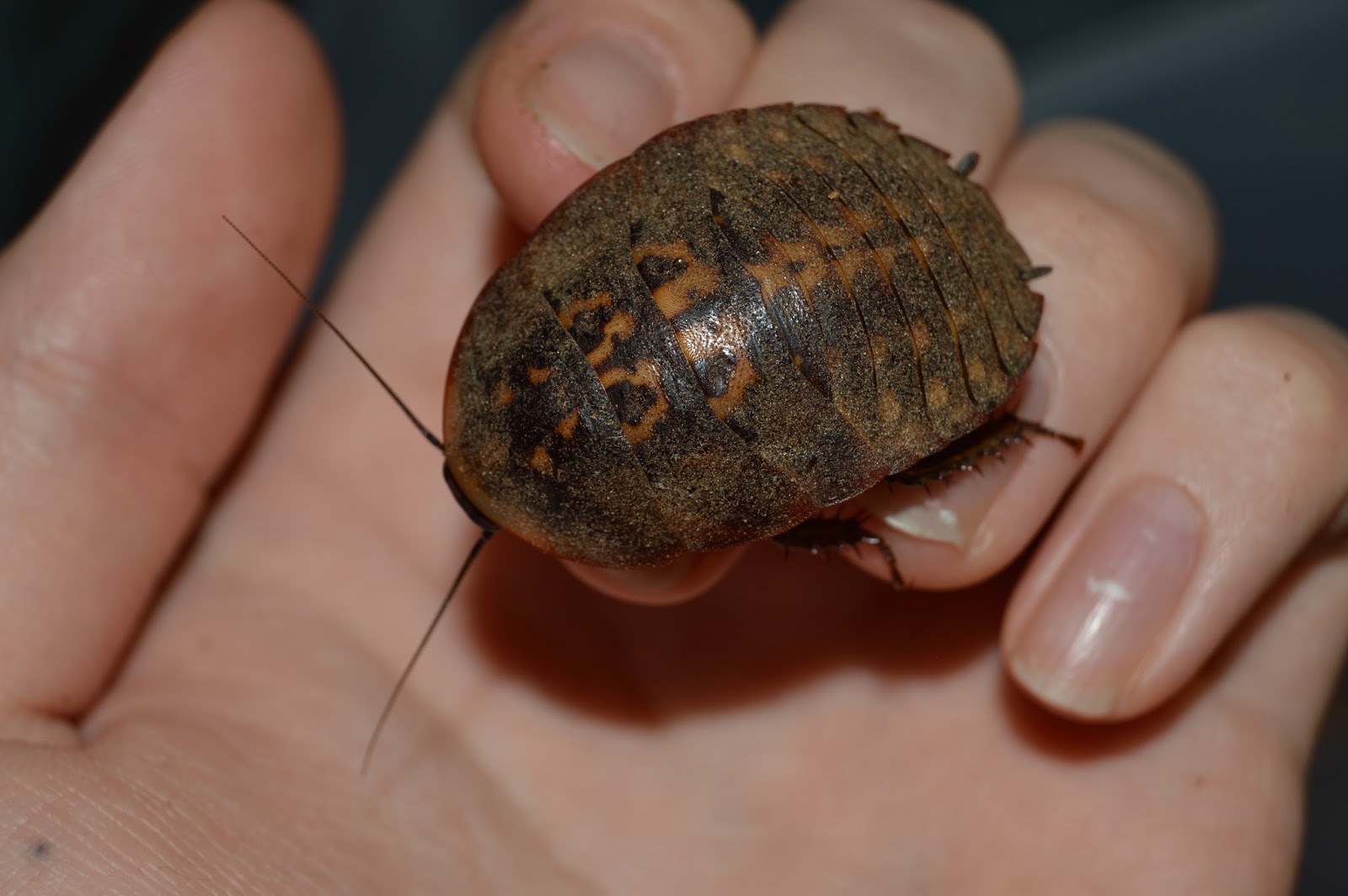
Second, all of my E.laevigata are pretty small, although a couple of them I'd consider very small, and a couple are almost medium-sized. I'm keeping them in a thirty two quart Sterilite gasket box container, with two 2.5 inch ventilation holes on each end. I have them on a substrate of dry coconut fiber(I still keep one corner moist) with a bit of coconut husk and dead leaves mixed in. I additionaly have a couple large semi-rotten pieces of wood in there to serve as both climbing surfaces and hides(you won't see the second piece in the photo though, I added it after I took it), along with a nice, non-porous Zoo Med food bowl.
 |
| E.laevigata nymphs |
 |
| E.laevigata enclosure |
I am really excited that I was able to snag up this rare and very colorful hisser species! Many of the nymphs already have beautiful streaks of color, I really can't wait until they get their very striking adult coloration! Also though I'd mention that I decided to house my adult male G.portentosa with these guys since he was really messing up my old adult male G.oblongonota.
Lastly, a couple of my D.punctata nymphs molted in shipping giving me a total of three adults! The rest of the nymphs are sub-adults or pre-sub-adults, except for one nymph that seems to be one molt behind the rest. Their enclosure is a twenty quart Sterilite gasket box container, with a three inch ventilation hole in each end. Their substrate is the same as the hissers', mainly coconut fiber with a small amount of coconut husk and dead leaves mixed in. I also have an egg-crate and a piece of cork bark for them to hide under.
Here are some pics of them and their enclosure!
 |
| D.punctata nymphs |
 |
| D.punctata adults |
 |
| D.punctata enclosure |
I'm obliged to Spencer for including this rare and very unique roach to my order for no extra charge. I was most attracted to acquiring this species because I found it very interesting that they're one of the only viviparous roaches and that they're the roach that scientists are experimenting with getting milk from. The adults of this species can also create a very strong defensive odor when frightened by releasing potent chemicals called benzoquinones, which are the same chemicals that tenebrionid beetles emit when frightened. Surprisingly, I have disturbed the adults a bit and have yet to smell the defensive odor, which is certainly not a bad thing!
That's going to be it for this post, hope you guys enjoyed hearing about my new roaches and until we meet again, so long!